
Peptide Analysis - show case for proton NMR
We now offer analysis of peptides using analytical techniques such as UV HPLC, LC-MS, and NMR. Proton NMR is a unique and powerful analytical tool to confirm molecular structure of organic compounds, including high molecular weight peptides.
With the current boom in off-label peptide use promoted by various social media posts, there are bad actors selling fake products. Here we showcase examples of proton NMR being able to easily identify fake peptide products. This is especially more dangerous when someone injects these fake products into their body – consequences can be deadly.
UV HPLC by itself is often not adequate. If a reference standard is available, once could compare HPLC peak retention time, but that retention time can be different if there are differences in salt form or solvent matrix between the sample analyzed and the reference standard.
For peptides that are larger than ~2000 Daltons in molecular weight, the ionization efficiency in an ESI (electrospray ionized) mass spectrometer is quite weak and can lead to incorrect identity confirmation. So, LC-MS analysis can be misleading at times.
Here we demonstrate that proton NMR analysis can easily identify fake and incorrect peptide products.
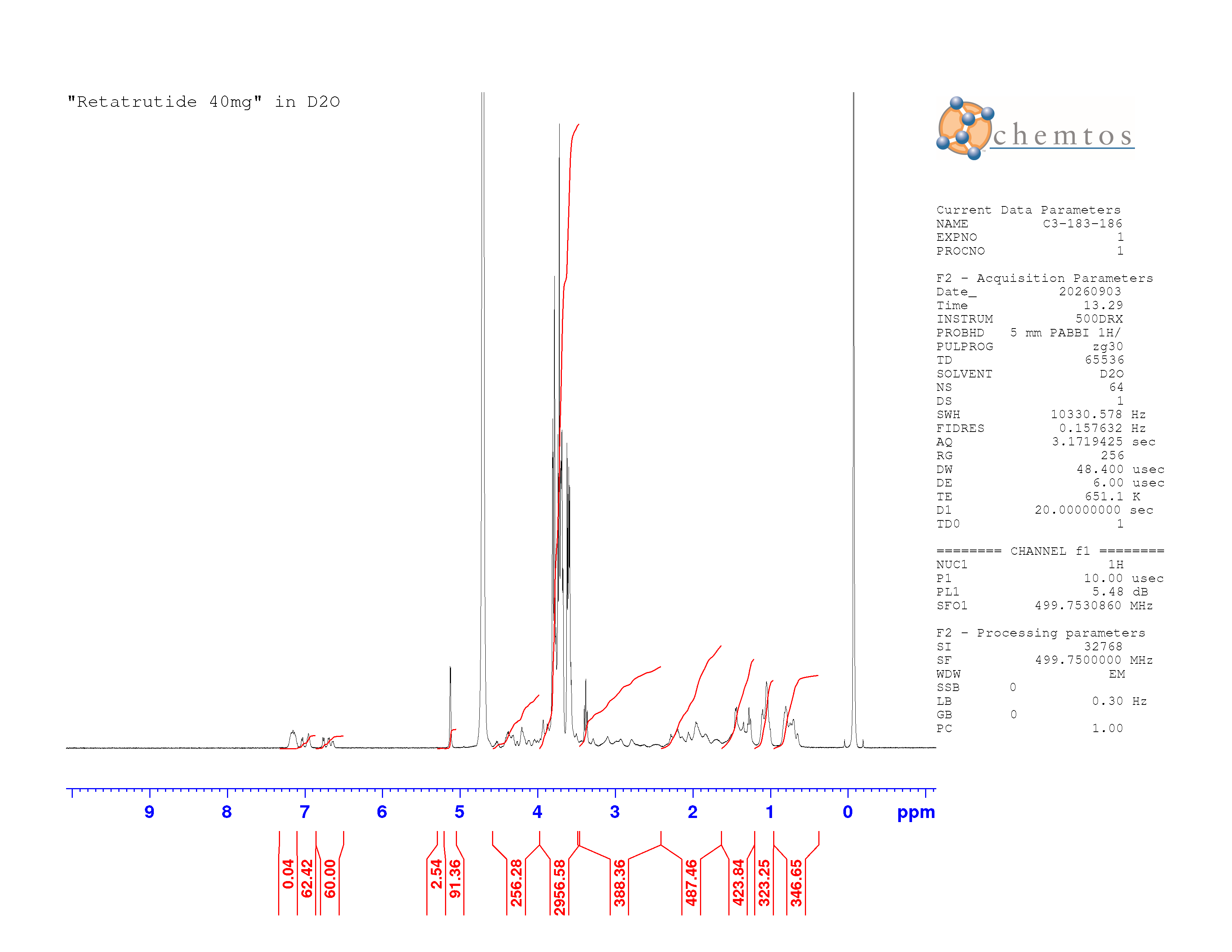
Even in an off-label peptide listed for R&D use only, these lyophilized peptide vial products contain excipient, peptide, and other additives to stabilize and administer the peptide. See example proton NMR of Retatrutide vial that contained the expected 4K+ molecular weight peptide product along with excipients in the lyophilized vial:
Following are proton NMR spectrum of BPC-157 vial which has no UV absorbing chromophore in the 3k+ molecular weight peptide for detection by UV HPLC. UV HPLC analysis will fail in attempting to detect this peptide.
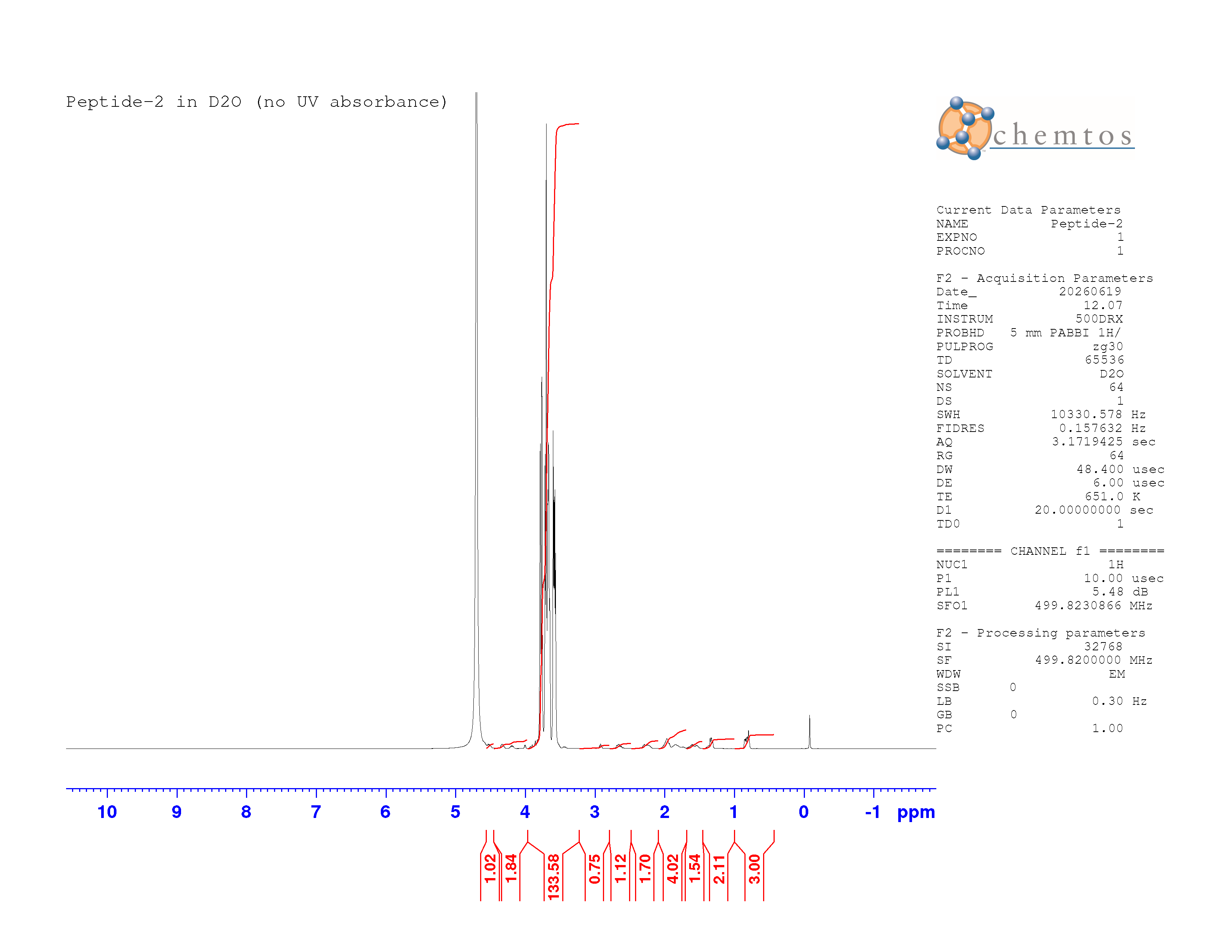
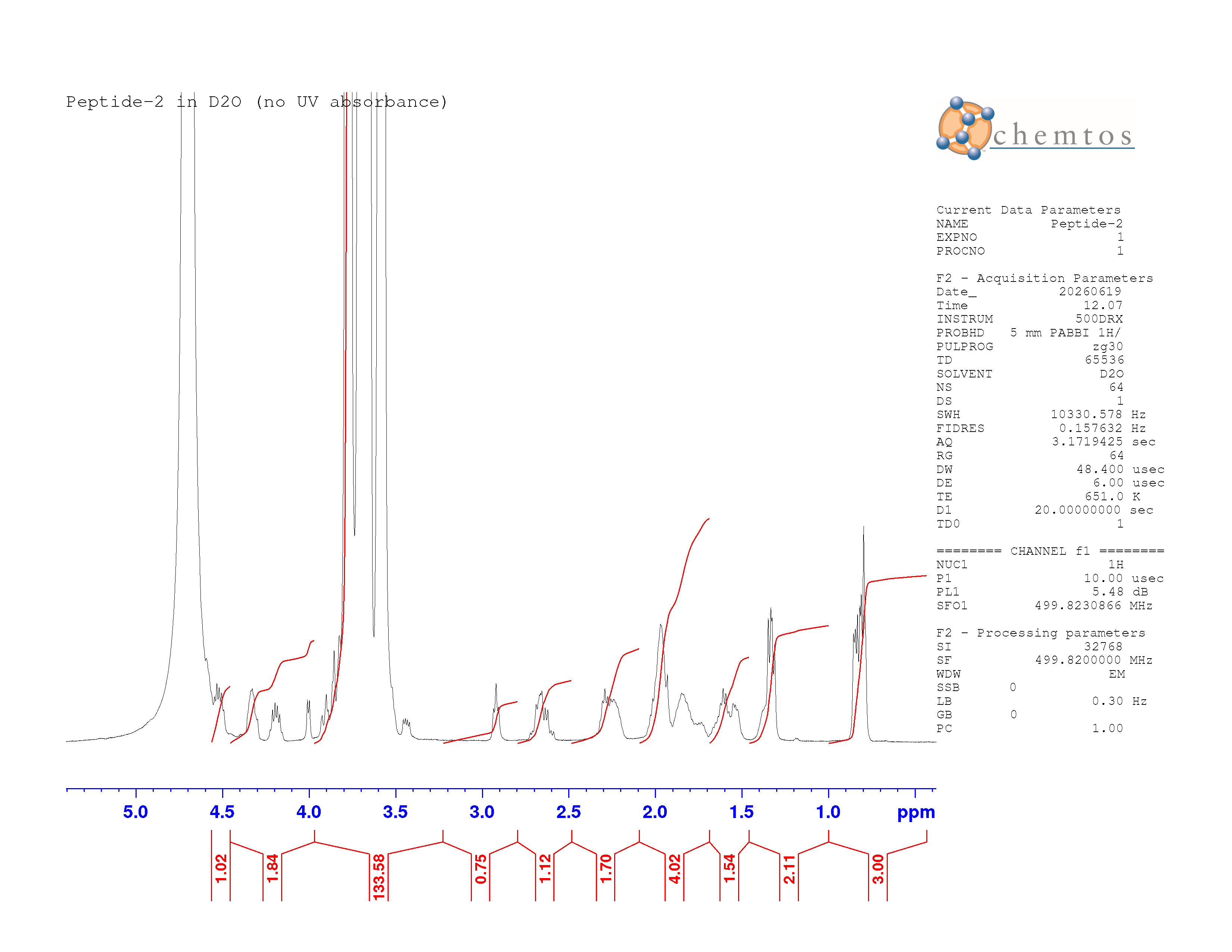
The following are examples when there was no peptide present in the vial, even though there was some other peak in its UV HPLC and incorrect LC-MS response. The proton NMR spectrum indicates presence of Excipient and some other compounds present in the vial.
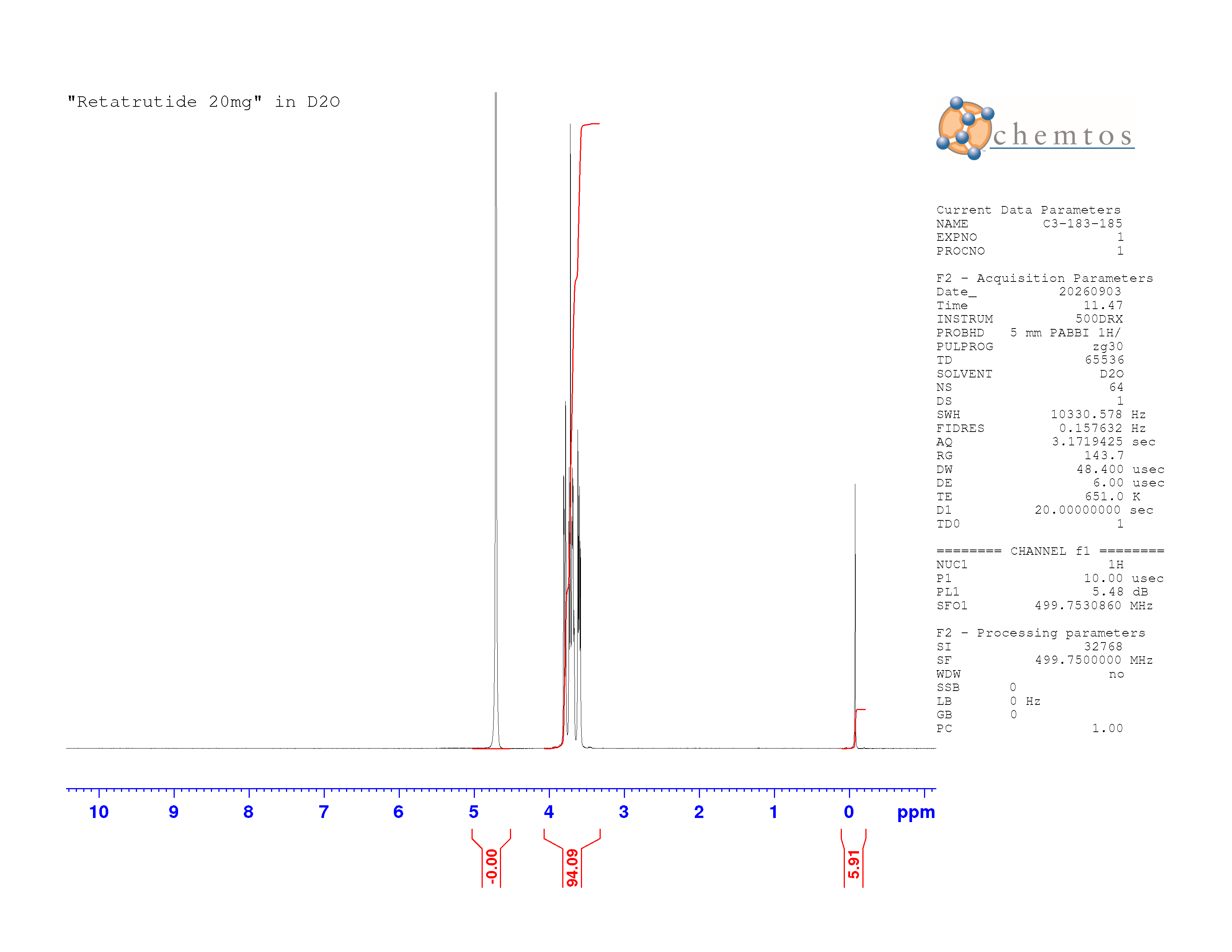
Following is proton NMR of vial labeled Retratrutide 20mg, that has mostly the excipient.
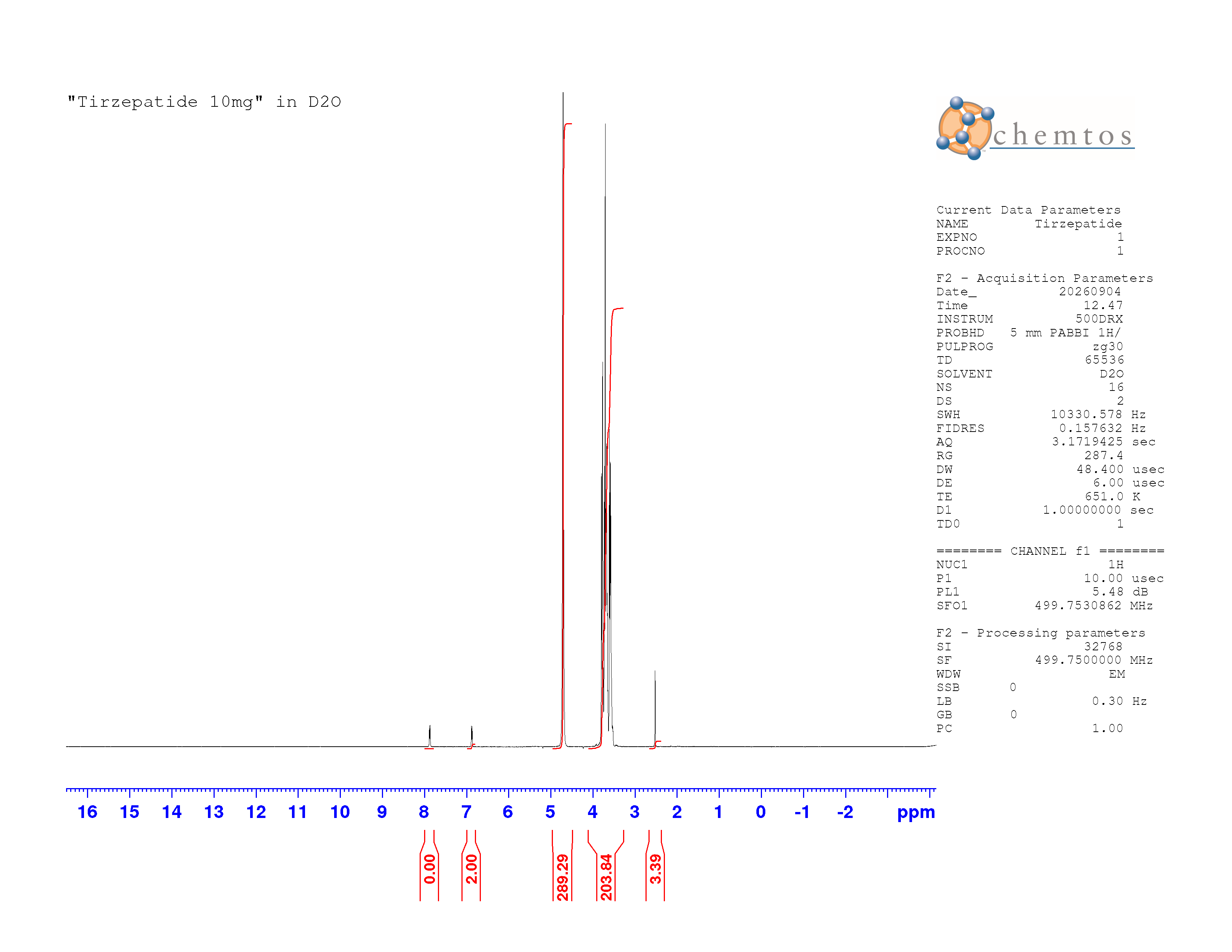
In the following proton NMR of vial labeled Tirzepatide 10mg, UV peak in UV HPLC was from the fake small molecule compound present in it. There was no peptide present.
The following is an example of proton NMR of a 4K+ molecular weight peptide without Excipient being present in it.
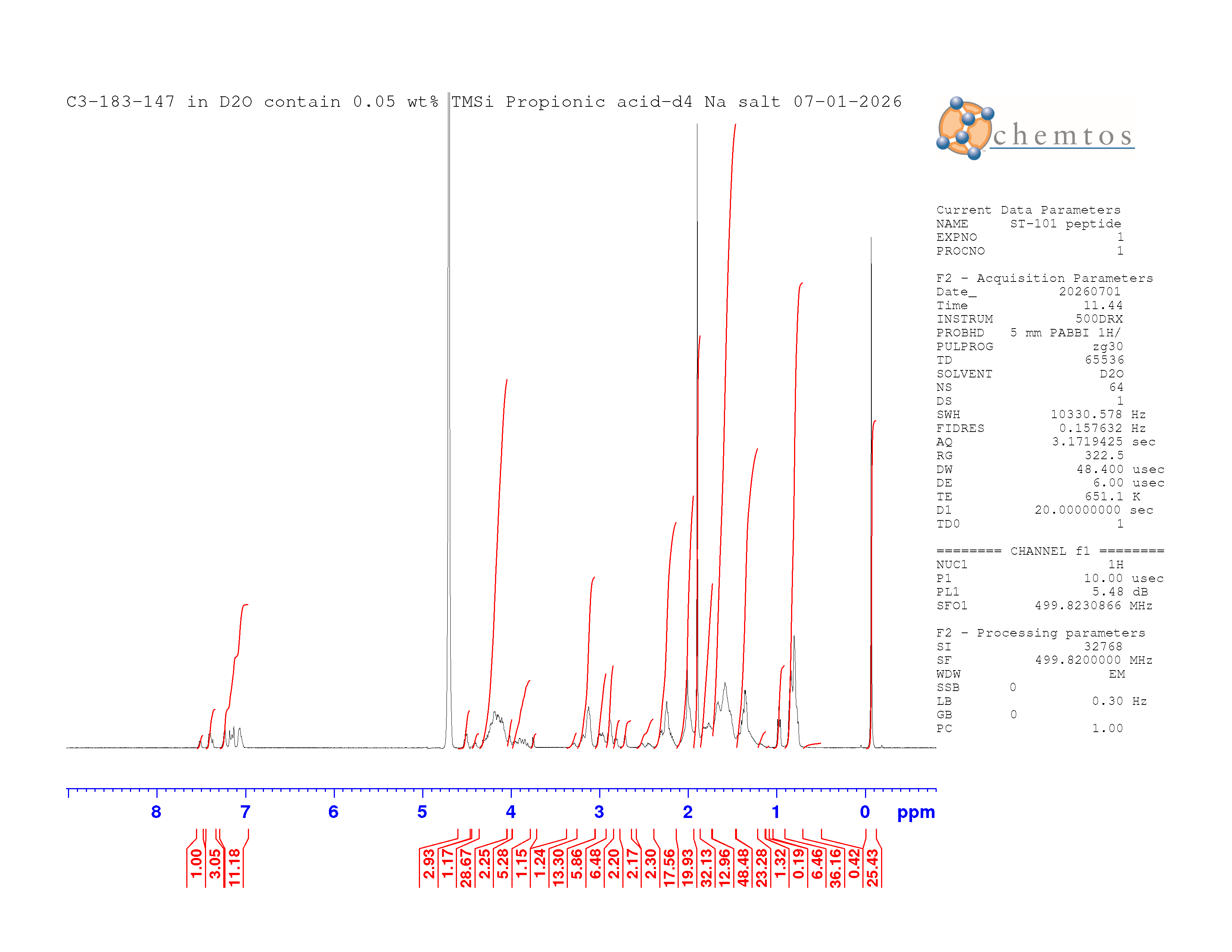
In proton NMR spectrum, the resonances (peaks) represent distinct functional molecular groups such as -CH3 or phenyl in intensity that is directly proportional to number of protons in that molecular group. So, if the molecular structure of the peptide is known, once can evaluate whether the observed relative intensity of the various resonances match those expected for that peptide. If the relative intensities match, we say NMR data is consistent with expected data. However, for conclusive molecular structure confirmation, including chiral purity, we need an authentic peptide sample (in identical salt form) for comparison. Even a single incorrect amino acid chiral form, such as L- instead of D-, will alter the proton NMR spectrum of the peptide. Proton NMR analysis can confirm whether the peptide present in the vial is the desired or expected one.
An extension of proton NMR is qNMR analysis. With qNMR analysis, one can confirm molecular structure and calculate the weight of peptide that is present in the vial. This is also known as weight percent potency. There is no other analytical technique that can independently provide such potency value without requiring a reference standard.